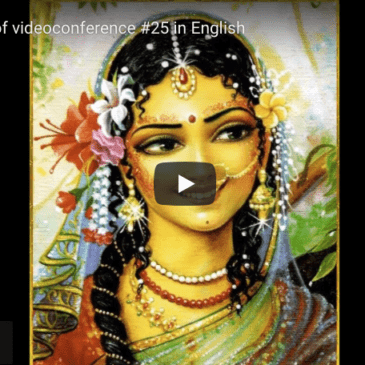

Nectar of Devotion – CHAPTER FORTY-FOUR: – Devotional Service In Conjugal Love
CHAPTER FORTY-FOUR Devotional Service In Conjugal Love A pure devotee’s attraction to Kṛṣṇa in conjugal love is called devotional service in conjugal love. Although such conjugal feelings are not at all material, there is … Read More
Nectar of Devotion CHAPTER THIRTY-EIGHT: – Indifference and Separation
CHAPTER THIRTY-EIGHT Indifference and Separation The great devotee Uddhava once wrote a letter to Kṛṣṇa, “My dear Kṛṣṇa, I have just finished the study of all kinds of philosophical books and Vedic verses about … Read More
Nectar of Devotion CHAPTER THIRTY-SIX: – Transcendental Affection (Servitude)
Transcendental Affection (Servitude) The transcendental mellow of affection has been accepted by authorities like Śrīdhara Svāmī as a perfectional stage of devotion. It is just above the humor of neutrality and is a requisite for … Read More
O Pārtha, how can a person who knows that the soul is indestructible
Lecture on BG 2.21-22 — London, August 26, 1973 Pradyumna: Translation: “O Pārtha, how can a person who knows that the soul is indestructible, unborn, eternal and immutable kill anyone or cause anyone to kill?” “As … Read More
The Flag of Devotion
By Keshava Murari das Arjuna and Krishna preparing for battle “The emblem of Hanuman on the flag of Arjuna is another sign of victory because Hanuman cooperated with Lord Rama in the battle between Rama … Read More
Ramanujacarya
Feb 4–Disappearance SILA RAMANUJACHARYA– HDGSP comments from His Books on SRILA RAMANUJACHARYA — Sriman Ramanujacarya’s guru was not from a brahmana family, but still, he accepted guru. >>> Ref. VedaBase => Bhagavad-gita 2.26 – November 30, … Read More
Bhagavad-gita 3.40 – indriyāṇi mano buddhir
इन्द्रियाणि मनो बुद्धिरस्याधिष्ठानमुच्यते । एतैर्विमोहयत्येष ज्ञानमावृत्य देहिनम् ॥ ४० ॥ indriyāṇi mano buddhir asyādhiṣṭhānam ucyate etair vimohayaty eṣa jñānam āvṛtya dehinam indriyāṇi — the senses; manaḥ — the mind; buddhiḥ — the intelligence; … Read More
Bhagavad-gita 3.35 – śreyān sva-dharmo viguṇaḥ
श्रेयान्स्वधर्मो विगुणः परधर्मात्स्वनुष्ठितात् । स्वधर्मे निधनं श्रेयः परधर्मो भयावहः ॥ ३५ ॥ śreyān sva-dharmo viguṇaḥ para-dharmāt sv-anuṣṭhitāt sva-dharme nidhanaṁ śreyaḥ para-dharmo bhayāvahaḥ śreyān — far better; sva–dharmaḥ — one’s prescribed duties; viguṇaḥ — … Read More
Bhagavad-gita 3.32 – ye tv etad abhyasūyanto
#BG 3.32 ये त्वेतदभ्यसूयन्तो नानुतिष्ठन्ति मे मतम् । सर्वज्ञानविमूढांस्तान्विद्धि नष्टानचेतसः ॥ ३२ ॥ ye tv etad abhyasūyanto nānutiṣṭhanti me matam sarva-jñāna-vimūḍhāṁs tān viddhi naṣṭān acetasaḥ ye — those; tu — however; etat … Read More
Srila Prabhupada has a special message for those who want to COMPROMISE His movement
HDGSP has a special message for those who want to COMPROMISE His movement–” Prabhupāda: Ardha-kukkuṭī-nyāya [Cc. Ādi 5.176]. [If you have faith in one but disrespect the other, your logic is like the logic of accepting … Read More
The Pandavas did not suffer
Indian (2): Then what was the necessity for the Pāṇḍavas to suffer when they had themselves surrendered to the Lord Kṛṣṇa, and they have suffered? Prabhupāda: They have not suffered. They have served Kṛṣṇa’s purposes. Kṛṣṇa … Read More
We should pay close attention to the welfare of others and ourselves
Srila Bhaktisiddhanta Saraswati Thakura : “We should pay close attention to the welfare of others and ourselves. We will not live in this world for too long. If we give up our bodies while chanting Hari’s … Read More
What India (Bharat-varsa) really looked like in 1945 without the “bogus territories” called Pakistan and Bangladesh.
What India (Bharat-varsa) really looked like in 1945 without the “bogus territories” called Pakistan and Bangladesh. We should never forget that barbaric Islam never existed until the 6th Century AD, and that their book the … Read More
Jiva Tattva, Narasimha Swami – 11-Conclusion: Bewilderment due to Vaisnava aparadha
11-Conclusion: Bewilderment due to Vaisnava aparadha Whenever Srila Prabhupada made statements indicating that we fell from the spiritual world, he did not quote sastra nor make subsidiary statements to back himself up (as he usually did … Read More