

 In section twenty-seven, Jiva Gosvami says:
“Therefore, we will only examine the Bhagavata Purana to determine the highest good. Our interpretation of the words of the Bhagavatam represent a type of bhasya.”
Thus, the Bhagavata-sandarbha, of which the Tattva-sandarbha is the first book, is a final explanation of Vaishnava philosophy which mainly uses the verses of Srimad-Bhagavatam, the most supreme of all scriptures.
“It will be written according to the views of the great Vaishnava, the revered Sridhara Swami, but only when these conform to the severe Vaishnava perspectives, as his writings are imbued with monistic ideas. Sridhara Swami did this to generate in the hearts of the Mayavadis an appreciation for the greatness of the Lord.”
Here the divine strategy is revealed. Sometimes a devotee may descend from the spiritual world and teach a doctrine that is contrary to the Absolute Truth, or that presents only a part of it, passing it off as complete. World history is full of these examples. One need only remember the Buddha, Shankara and many other Vedic sages.
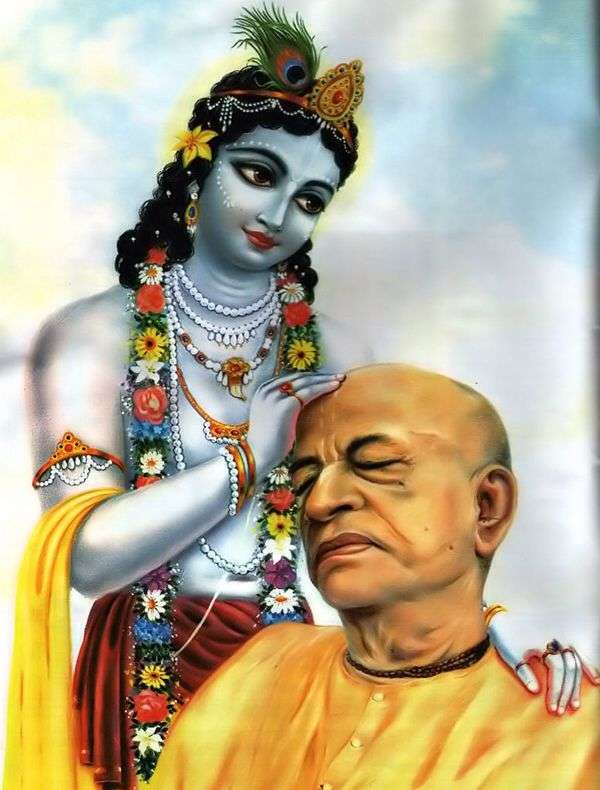
This system serves to gradually raise people’s consciousness so that the atmosphere becomes more and more suitable for assimilating higher and higher levels of Truth. The highest and most complete philosophy, the siddhanta, free from any historical compromise, was put forward by Lord Caitanya and His spiritual descendants, including the six Gosvamis of Vrindavana, among whom we find Jiva Gosvami. We are fortunate to be disciples of Bhaktivedanta Swami Prabhupada, the eighth descendant of Sri Jiva.
The latter had a different task than Sridhara Swami; he did not need to mediate with Mayavada beliefs. Therefore, he states that he would take from the Swami only that which corresponds to pure Vaishnava philosophy.
Elsewhere, our interpretation will be based on the doctrines of Venerable Ramanuja; in others, they will differ from both (Sridhara Swami and Ramanuja), wanting to follow the natural sense of the Bhagavata.
The intention to present the unveiled Vaishnava doctrine free of any kind of compromise is openly stated here. While others have had to compromise to succeed in their legitimate mission, Jiva Gosvami would not make deals of any kind with philosophy. He also adds that since Advaita doctrines are well known, they will not be addressed in this text, however, some points will be addressed in Baladeva’s commentaries, so we will not avoid discussing them.
This is a section of the book “Tattva Sandarbha”, in English.
To buy the complete book, click here

Leave a Reply